

By : Hafid Abbas (Visiting Professor at Tsai Lecture Series Asia Center Harvard University, 2006 )
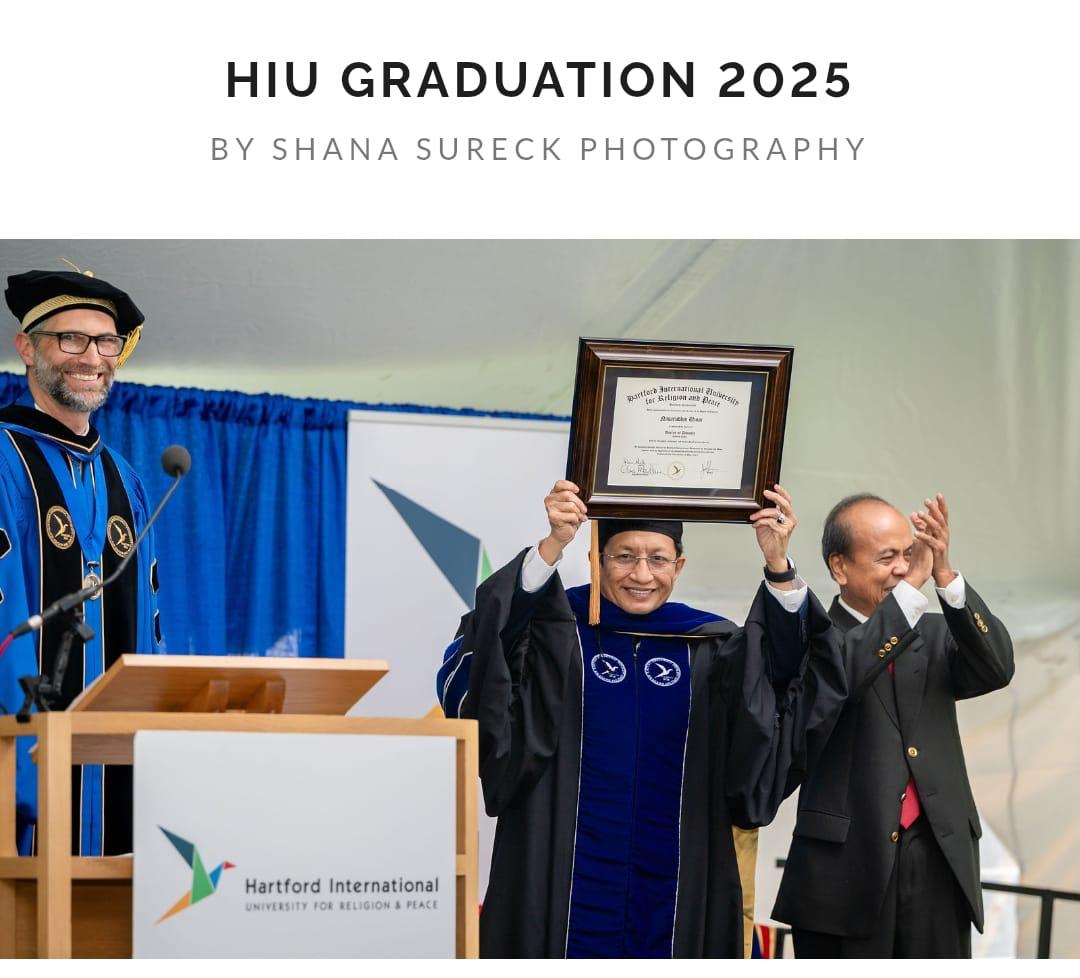
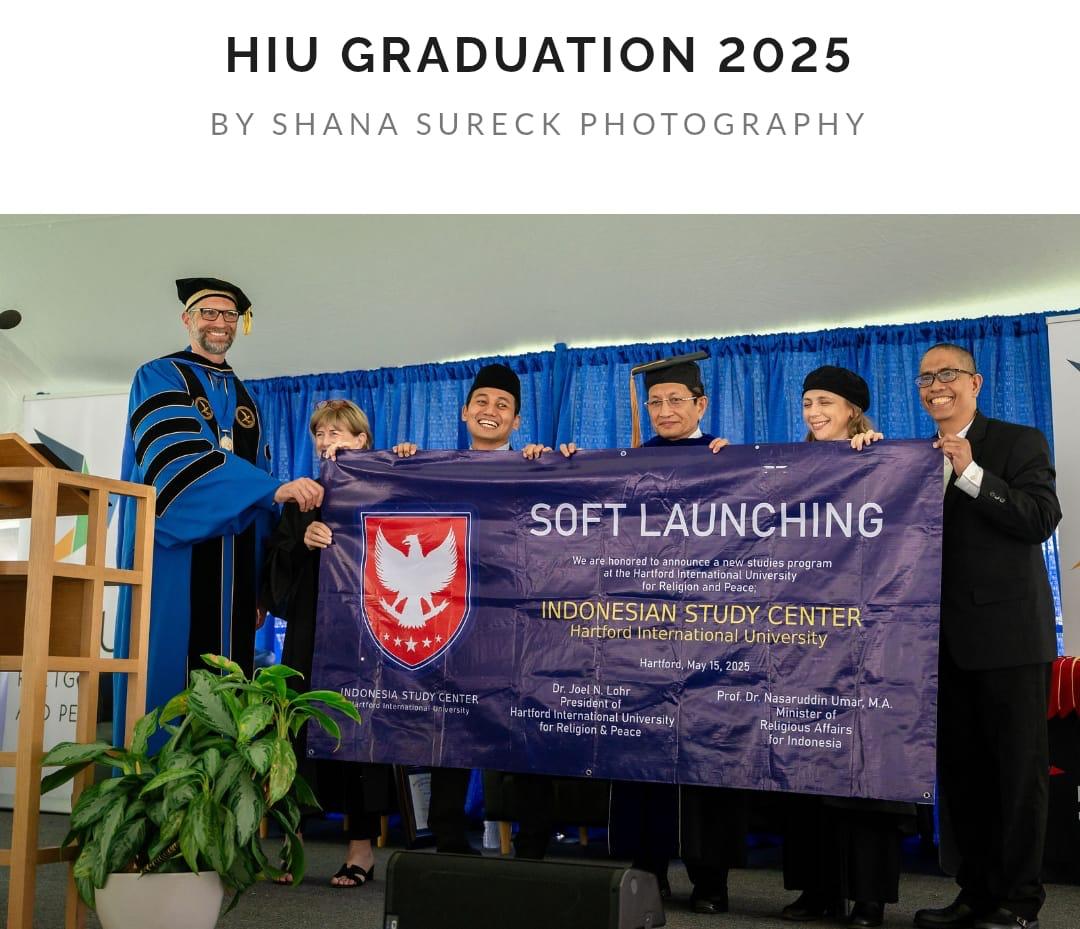
The recent events at Hartford International University for Religion and Peace (HIU) on May 15, 2025, marked a historic moment for both the university and the Republic of Indonesia. At the graduation ceremony, Professor Joel Lohr of HIU President awarded an Honorary Doctoral Degree to Grand Imam Istiqlal Mosque and Indonesia’s Minister of Religious Affairs, Professor Nasaruddin Umar, underscoring the growing and multi-dimensional relationship between the United States and Indonesia. This gesture not only honors their leadership but also emphasizes the commitment to fostering stronger ties in various areas, such as education, religion, peace, human rights and cross-cultural understanding. Furthermore, the occasion also witnessed the soft launch of the Indonesia Study Center (ISC) at HIU, marking a new chapter in the U.S.-Indonesia relationship.
The ISC at HIU is more than just an academic initiative; it represents a unique opportunity for the U.S. and Indonesia to address critical regional and global issues. As the U.S. continues to focus on maintaining a free and open Indo-Pacific, Indonesia stands out as a pivotal partner. The center will be a platform for addressing regional challenges that both countries face, particularly in collaboration with ASEAN (Association of Southeast Asian Nations). In this context, the ISC will foster research, dialogue, and initiatives that deepen understanding of Indonesia’s strategic role within ASEAN and the broader Indo-Pacific region. Indonesia, as a key member of ASEAN and a world leader, plays an instrumental role in shaping the region’s future through multilateral diplomacy and conflict resolution efforts.
Under such circumstances, the soft launching of ISC at HIU will obviously contribute to these fronts. First, it will strengthen U.S.-Indonesia ties in addressing regional and global challenges. The U.S. views Indonesia—home to the world’s third-largest democracy, the largest Muslim population, and a rapidly growing economy—as a central player in addressing key regional and global challenges. Through initiatives like the Comprehensive Strategic Partnership (2021), both countries have been working closely to enhance cooperation in areas such as democratic governance, regional security, economic development, and climate change. The U.S. has consistently supported Indonesia’s efforts to strengthen its democratic institutions and ensure human rights protection.
At the same time, Indonesia values its relationship with the U.S. as it seeks to maintain a neutral position in U.S.-China geopolitical tensions, instead prioritizing regional stability and multilateral diplomacy.
One of the significant areas of cooperation is in the Indo-Pacific, a region that both countries regard as critical to global peace and prosperity. The ISC will serve as an intellectual and diplomatic hub to explore regional security issues, such as the South China Sea disputes, maritime security, and counterterrorism. Moreover, through this center, Indonesia’s experiences in peacebuilding—such as its role in the Helsinki Peace Accord in Aceh or its leadership in interfaith dialogue—will contribute to regional and global efforts in conflict transformation.
This collaboration offers insights that can help resolve tensions across the Indo-Pacific while supporting ASEAN’s centrality in regional governance.
Additionally, the Indonesia Study Center will focus on cross- cultural exchange and fostering greater mutual understanding between the U.S. and Indonesia. This is crucial as both countries share common goals of promoting peace and sustainable development within the Indo-Pacific region.
Indonesia’s remarkable transformation from a militaristic authoritarian regime in the late 1990s to one of the world’s largest democracies offers important lessons in conflict resolution and democratic consolidation. The center will serve as a vehicle to share these experiences and further solidify Indonesia’s role as a peaceful power in the global arena.
Secondly, the center will likely be a bridge between cultures for a shared vision for peace and prosperity. As Indonesia continues to grow as an economic and diplomatic force, its leadership in international organizations such as the Organization of Islamic Cooperation (OIC) and the Non-Aligned Movement (NAM) presents unique opportunities for collaboration. The ISC at HIU will become a key player in strengthening Indonesia’s relationships within these global organizations. Indonesia’s position as the leader of the OIC, representing the interests of nearly two billion Muslims worldwide, gives it an important voice in the Islamic world.
Through the ISC, the U.S. and Indonesia can engage in dialogue to foster greater understanding of Islamic traditions and interfaith cooperation, especially in an increasingly polarized global environment.
The Non-Aligned Movement (NAM), which consists of 118 member countries, represents a diverse and influential group of nations committed to sovereignty, peace, and neutral diplomacy. Indonesia has historically been an advocate for the movement, hosting the Asian African Conference in Bandung, 1955, to promote multilateralism and global cooperation.
By collaborating through the ISC, both Indonesia and the U.S. will have the opportunity to address shared global concerns— from human rights and socioeconomic development to climate change and conflict prevention—through the lens of non- alignment and diplomatic engagement.
Third, the ISC at HIU aims to play a key role in advancing several critical goals that will benefit not just the U.S. and Indonesia but also the broader international community. These goals include:
Promoting Indonesian Language, Culture, and Peace: The ISC will offer language courses, cultural events, and exhibitions to raise global awareness about Indonesia’s rich heritage.
Through these programs, the center aims to foster a deeper understanding of Indonesian culture, history, and the importance of peace in a diverse world.
Academic Research and Collaboration: The center will encourage research collaborations between scholars from both countries, offering a platform to study Indonesia’s political, cultural, and economic developments. It will be a critical hub for analyzing issues such as democratization, religious tolerance, and sustainable development in Indonesia and the region.
Supporting Indonesian Students: The ISC will also serve as a resource for Indonesian students studying in the U.S., offering academic guidance, cultural integration support, and personal development programs. This will strengthen people-to-people ties and help students navigate their academic journeys abroad.
Diplomatic Engagement: The center will serve as an extension of Indonesia’s diplomatic efforts, building stronger bilateral ties between Indonesia and the U.S. through academic, cultural, and diplomatic engagement.
Sharing Indonesia’s Peacebuilding Experiences: Indonesia’s remarkable journey in overcoming authoritarianism, political conflict, and natural disasters provides valuable lessons for global peacebuilding. The ISC will share Indonesia’s experience in resolving conflict, particularly its work in regions like Aceh, Maluku, and Poso, which are examples of successful peace processes.
Lastly, the ISC at HIU represents more than just a scholarly endeavor; it is a significant milestone in the growing relationship between Indonesia and the U.S. As both countries face an increasingly complex global landscape, this initiative offers an opportunity to strengthen bilateral cooperation, promote peace, and address regional challenges through education, research, and diplomacy. The center will play a key role in engaging with ASEAN, the OIC, and the Non-Aligned Movement, fostering mutual understanding and collaborative solutions to the challenges of the 21st century.
This new page in U.S.- Indonesia relations marks the beginning of a fruitful partnership, one that will shape the future of both nations and the wider world
