

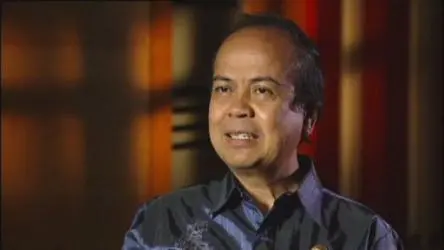
By: Hafid Abbas (Commissioner and 8th President of Indonesia’s National Commission of Human Rights (2012–2017))
In an era marked by escalating geopolitical tensions, protracted armed conflicts, and an urgent demand for collective humanitarian action, Indonesia’s election as President of the United Nations Human Rights Council (UNHRC) for 2026 represents far more than a procedural diplomatic achievement. It is the result of deliberate, sustained, and strategic leadership under President Prabowo Subianto, strongly supported by the pivotal diplomatic role of Minister of Foreign Affairs Soegiono and the intensive international lobbying efforts led by Minister of Human Rights Natalius Pigai.
On 24 December 2025, the Asia-Pacific Group officially selected Indonesia to assume the UNHRC Presidency for the 2026 session, with formal endorsement scheduled at the Council’s organizational meeting on 8 January 2026. This outcome did not emerge spontaneously. It was the culmination of coordinated diplomacy spearheaded by the Ministry of Foreign Affairs under Minister Soegiono, who ensured coherence between Indonesia’s foreign policy vision and its multilateral human rights agenda, while reinforcing Indonesia’s credibility as an impartial and constructive global actor.
Equally decisive was the hands-on diplomacy of Minister of Human Rights Natalius Pigai. In the months preceding the election, Minister Pigai undertook extensive visits to numerous countries across regions, engaging directly with governments, diplomats, and human rights stakeholders to build trust and rally support for Indonesia’s candidacy. His outreach emphasized Indonesia’s democratic credentials, its constitutional commitment to human rights, and its readiness to lead the Council in an inclusive, transparent, and non-politicized manner. The breadth of support secured through these efforts proved that Pigai’s lobbying was not only intensive but highly effective, playing a crucial role in Indonesia’s successful election.
Ambassador Sidharto Reza Suryodipuro, Indonesia’s Permanent Representative to the United Nations in Geneva, will preside over the Council throughout 2026, advancing Jakarta’s guiding theme of “A Presidency for All.” This theme—developed through close coordination between the Foreign Ministry and the Ministry of Human Rights—underscores impartiality, transparency, inclusivity, dialogue, and consensus-building, while amplifying the voices of developing countries, particularly from Asia and the Pacific.
Indonesia’s UNHRC presidency affirms its long-standing role as a bridge between civilizations, religions, and geopolitical interests. It reflects a diplomatic tradition grounded in global justice, human dignity, and solidarity with populations affected by conflict, displacement, and systemic inequality. At a time when the world confronts overlapping crises—from refugee emergencies in Ukraine and the Sahel to renewed violence in the Middle East—Indonesia’s leadership carries both moral weight and practical responsibility.
President Prabowo Subianto powerfully articulated this broader vision during his address to the United Nations General Assembly on 23 September 2025. Speaking with moral clarity and geopolitical realism, he condemned the continued targeting of civilians and reaffirmed Indonesia’s conviction that political conflicts cannot be resolved through force. His call for an immediate end to violence, particularly in Gaza, and for a decisive international humanitarian response reflected Indonesia’s principled stance on justice and human rights.
President Prabowo’s reaffirmation of support for a Two-State Solution—an independent Palestine coexisting peacefully with a secure and recognized Israel—resonates deeply with the mandate of the UNHRC. Indonesia’s openness to recognizing Israel following the establishment of a Palestinian state, as well as its readiness to contribute peacekeepers under a UN mandate, illustrates Jakarta’s commitment to translating ethical principles into concrete multilateral action.
The linkage between President Prabowo’s UNGA message and Indonesia’s UNHRC presidency is substantive rather than symbolic. Under the diplomatic stewardship of Minister Soegiono and the human rights advocacy of Minister Pigai, Indonesia has positioned itself to advance principled multilateralism, strengthen Council mechanisms, expand technical cooperation, and ensure that developing countries are not marginalized within global human rights discourse. Indonesia thus approaches the UNHRC presidency not merely as a custodian of procedure, but as an architect of constructive, consensus-based solutions.
Indonesia’s leadership at the global level is inseparable from its central role within ASEAN. As ASEAN’s diplomatic anchor, Indonesia plays a decisive role in advancing the ASEAN Community Vision 2045—promoting political stability, economic interdependence, and people-centered development. Minister Soegiono’s regional diplomacy and Indonesia’s human rights engagement reinforce Southeast Asia’s stability while elevating ASEAN’s credibility on the global stage.
Equally significant is Indonesia’s position as the world’s largest Muslim-majority nation and a respected leader within the Organisation of Islamic Cooperation (OIC). Indonesia’s approach—emphasizing moderation, inclusivity, humanitarian protection, and dialogue—provides moral authority in addressing crises affecting Muslim communities, from Palestine to the Rohingya situation in Myanmar. Minister Pigai’s international outreach has further strengthened Indonesia’s standing as a credible advocate for justice grounded in universal human rights norms.
Indonesia’s contemporary leadership is deeply rooted in its historic legacy. The 1955 Asian-African Conference in Bandung laid the foundation for the Non-Aligned Movement, championing self-determination, mutual respect, and peaceful coexistence. These principles continue to guide Indonesia’s foreign policy today, positioning it as a connector among Global South nations and a defender of multilateral cooperation over domination.
Indonesia’s 2026 UNHRC Presidency is therefore not simply an administrative honor. It is the outcome of deliberate leadership by President Prabowo, strategic diplomacy by Minister Soegiono, and tireless international engagement by Minister Natalius Pigai. Together, they have translated Indonesia’s constitutional commitment to human rights into tangible global leadership.
In an age marked by division and exhaustion, Indonesia’s UNHRC presidency stands as a reminder that genuine leadership is measured not by power, but by the ability to mobilize trust, build consensus, and anchor global cooperation in shared humanity and the enduring pursuit of peace.
